
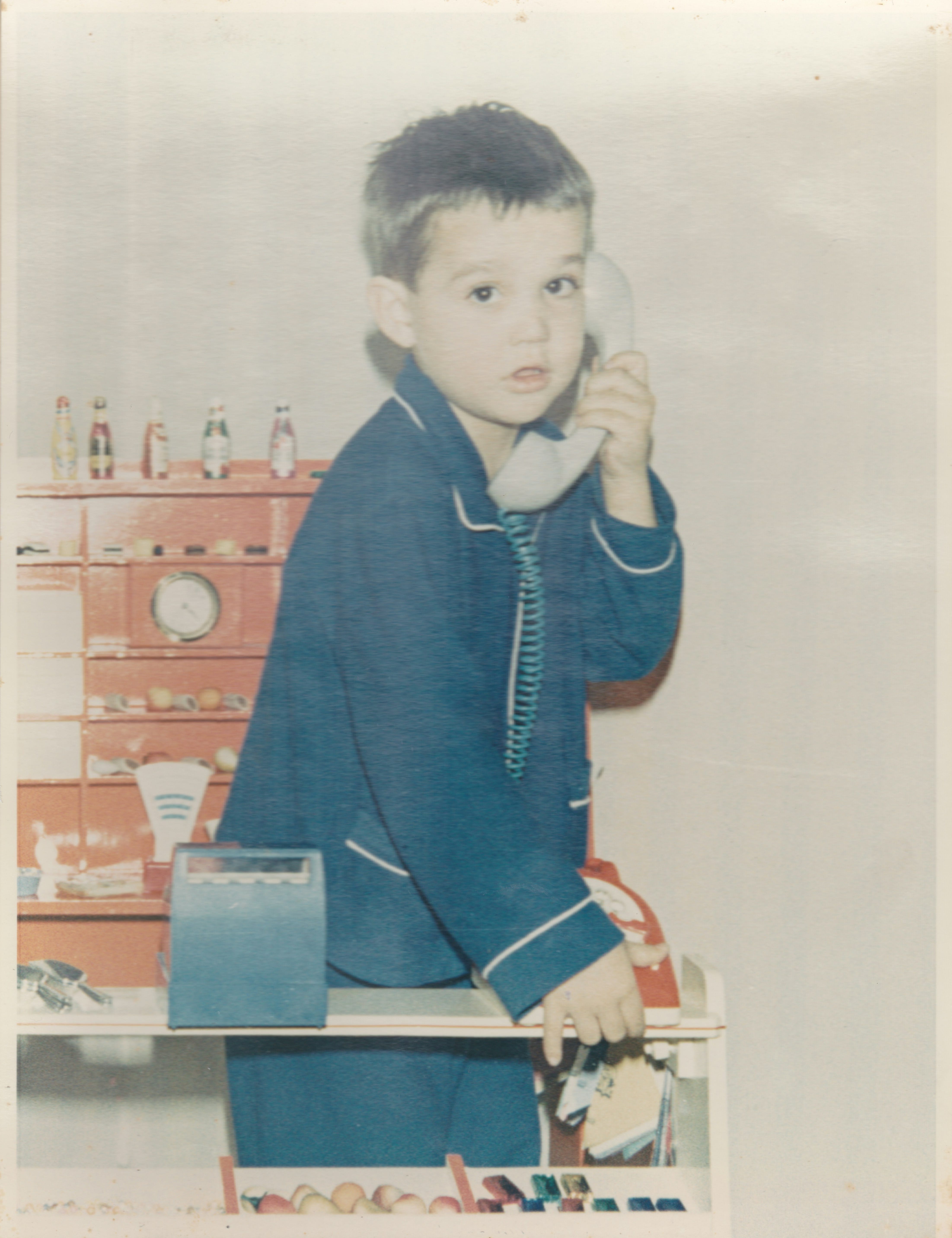
My favorite game as a child was telephone, I’m guessing you’ve probably played it too. Everyone sits in a circle, the person who starts whispers a sentence to the person next to them, and that person passes it to the person on their other side until it travels around the circle, and the last person says something totally absurd. The whole group laughs because everyone knows it wasn’t what they said and yet nobody lied. Each person passed along what they honestly thought they heard.
Most misinformation is not spread by liars. It is spread by sincere people repeating something that someone sincerely told them, and each retelling changed it a little, because the recounting of any story has multiple fail points along the way.
So how do you decipher if a story you’re hearing someone tell is what really happened or a distortion that evolved as it got passed around?
As a psychologist, I think one of the best defenses against misinformation, is understanding how human memory and belief really work, including our own.
Memory is a reconstruction, not a recording
We tend to think that memory is like a video recording, and once we store it in our head, we can replay it on demand. But it doesn’t actually work that way at all. What we really do when we remember something, is we rebuild the event from pieces of information that can often be distorted. Here are some reasons why:
What gets stored is a combination of what happened and what we interpreted. In a classic study, people were shown simple, ambiguous drawings, each with a label about what it was. A shape halfway between a crescent moon and the letter C might be called either one. When they later drew the shapes from memory, their drawings shifted toward the label they had been given [1].
Our emotional state can also influence what gets recorded. In another study, when people with social anxiety wrote endings for ambiguous social situations, their endings were more negative than other people’s. When they later tried to recall the situations, they mixed in negative details from their own interpretations [2].
We fill in memory gaps with what we think we should have seen or expected to see. It was demonstrated that after waiting briefly in what some students believed was a professor’s office, they later recalled seeing books on the shelves, though there were no books in the room [3].
People consistently remember seeing more of a scene than was actually in the photo. Psychologists call this phenomenon boundary extension [4]. After viewing close-up photographs, people tended to draw the scenes with more background than the photos showed, adding what might have been just outside the frame.
We often fill in gaps with knowledge and information that we hear afterwards. People who watched a film of a car accident and were asked how fast the cars were going when they “smashed” into each other were later more likely to report seeing broken glass, though there was none [5].
Our present mood state also affects what we recall from the past. If we are feeling upset, we are likely to remember an event differently than if we are in a good mood. When happy or sad moods were induced in study participants, they recalled more of their own past experiences that matched the mood they were in [6].
Why “I saw it with my own eyes” is not the end of the story
Retelling a story you are remembering can be inaccurate even when it is a firsthand event.
We tend to think that eyewitness testimony is the gold standard of evidence. The person was there. They have no reason to lie. But the legal system has taught us that sincere witnesses are often wrong.
The Innocence Project tracked the first 375 DNA exonerations in the United States, from 1989 to 2020. Eyewitness misidentification played a role in 69% of the cases [7]. These were people who had been convicted, in part, on the testimony of someone who honestly remembered seeing the person at the scene.
We remember the story and forget where we heard it
You’ve probably had the experience of thinking about something you “know” but you can’t recall where you learned it. Maybe it was a movie, a friend at dinner, or a random post you scrolled past? Most of us cannot say where we learned many of our own beliefs.
Psychologists call identifying where a memory came from source monitoring. Marcia Johnson et al. found that we do not store what we hear with a neat label such as “I heard this from X.” Instead, we infer the source from features of the memory itself, but that inference can be wrong. For example, you may ‘remember’ a childhood event, like getting lost at the store, when what you really remember is hearing your family tell the story so many times that you can picture it. [8].
Repetition can actually make the problem worse. Studies on the illusory truth effect shows that statements that we’ve seen before are easier to process, and that ease can often feel like truth. Lisa Fazio et al. found that this happens even when people already know the correct answer. Repetition made false statements seem more believable to participants who, later reported they knew better [9]. It is important to remember that familiarity is not evidence, it only feels like it.
The social media amplifier
Today’s social media culture reminds me of the game of telephone. What has changed is the size of the circle and how fast the whisper travels. Today almost everyone is a publisher of some sort, and attention is the currency. Posts that get shared are rewarded with views, likes and income. And since social media companies have absolved themselves of being “the arbiters of truth” [10], it doesn’t matter whether what gets posted is true or not. A secondhand story that used to only reach a dinner table can now reach millions of people before anyone bothers to check it.
Now put these very human memory quirks described above inside this system built to reward attention.
In a large study published in Science, Vosoughi et al. examined roughly 126,000 news stories shared on Twitter between 2006 and 2017, each was checked by an independent fact-checking organizations. False stories spread farther, faster, deeper and more broadly than true ones in every category [11].
But the harder problem to see, is that the person telling the story may be two, three, or four people removed from anyone who actually witnessed it. By the time it reaches you, you might be hearing someone’s memory of someone else’s account of what another person said happened. Each person retelling the story brings their own interpretations, emotions, expectations and memory failures to the story that gets repeated.
Then the story starts showing up everywhere. You may see it on several podcasts, read about it in other people’s posts, and hear people discussing it as though it is established knowledge. It can seem as though multiple sources are confirming the same event, when all of them are really just repeating the same original story whose source no one can seem to identify.
The demand for content gives the story more opportunities to grow. One person summarizes it, another offers an interpretation, and another speculates about what it could mean. New additions to the story get added each time it is discussed until it becomes difficult to separate them from what was originally reported.
How to evaluate what you hear
These are the questions I find most useful when I’m trying to decide how much to trust a story I’m hearing.
1. How many links are in the chain?
Is this a firsthand account, or is it “someone told me something someone told them”? Always ask to see the original source, not just the summary of a summary. If the source can’t be identified, keep a question mark next to it.
2. Are they talking about what was observed or what was concluded?
“I saw a bright light over the ridge” is an observation, while “it was a space craft” or “it was a planet” are interpretations. Both can be stated with sincerity, but only one was seen. Observations should be trusted over interpretations.
3. Does the story keep growing bigger?
Look for the earliest version you can find and compare it next to the one you are hearing now. Has the light become a craft, the one witness become several, a “maybe” become a “definitely”? If there are details that appear only in later versions of a retelling, it is fair to ask where they came from.
4. Has their confidence in the story shifted over time?
People can have good reason to be very confident of their stories, but certainty can also grow after the fact. In a classic study, eyewitnesses who were told “Good, you identified the suspect” afterward reported more certainty about their choice than those who got no feedback [12]. Be curious about when the person became so sure, and what happened in between.
5. What are the incentives?
Who benefits if the story spreads? Does the person telling it earn attention, followers or income from it? Are there platform rewards such as likes and comments? Is there a book comming out soon? Incentives do not make a claim false, but they are worth knowing.
The point is humility, not cynicism
A children’s game of telephone is low stakes fun, but the real life misinformation chain comes with consequences. People’s lives can be altered, decisions can be made based on false fear or hope, communities can be divided, and reputations can be damaged.
I joined the UAP Science Advisory Council because I wanted to help solve the mystery of UAP and understand the human story that surrounds it. One big challenge is trying to sort through all of the ‘someone told me something someone told them’ stories that are out there.
It takes courage and humility to break the chain and ask for more questions when everyone around you seems certain. I would encourage everyone interested in this subject to do exactly that. Before you believe a story or share it with someone else, first ask yourself the 5 questions. When questions remain unanswered, we don’t have to decide whether a story is true or false. We can leave it unresolved until we have better information. And while the words “I don’t know” may never go viral, for now they may be the closest we can come to the truth.
Advisory Boards
References
Carmichael, L., Hogan, H. P., & Walter, A. A. (1932). An experimental study of the effect of language on the reproduction of visually perceived form. Journal of Experimental Psychology, 15, 73–86. https://doi.org/10.1037/h0072671
2. Hertel, P. T., Brozovich, F., Joormann, J., & Gotlib, I. H. (2008). Biases in interpretation and memory in generalized social phobia. Journal of Abnormal Psychology, 117(2), 278–288. https://doi.org/10.1037/0021-843X.117.2.278
3. Brewer, W. F., & Treyens, J. C. (1981). Role of schemata in memory for places. Cognitive Psychology, 13(2), 207–230. https://doi.org/10.1016/0010-0285(81)90008-6
4. Intraub, H., & Richardson, M. (1989). Wide-angle memories of close-up scenes. Journal of Experimental Psychology: Learning, Memory, and Cognition, 15(2), 179–187. https://doi.org/10.1037/0278-7393.15.2.179
5. Loftus, E. F., & Palmer, J. C. (1974). Reconstruction of automobile destruction: An example of the interaction between language and memory. Journal of Verbal Learning and Verbal Behavior, 13, 585–589. https://doi.org/10.1016/S0022-5371(74)80011-3
6. Snyder, M., & White, P. (1982). Moods and memories: Elation, depression, and the remembering of the events of one’s life. Journal of Personality, 50(2), 149–167. https://doi.org/10.1111/j.1467-6494.1982.tb01020.x
7. Innocence Project. (n.d.). DNA exonerations in the United States (1989–2020). Retrieved October 9, 2026, from https://innocenceproject.org/dna-exonerations-in-the-united-states/
8. Johnson, M. K., Hashtroudi, S., & Lindsay, D. S. (1993). Source monitoring. Psychological Bulletin, 114(1), 3–28. https://doi.org/10.1037/0033-2909.114.1.3
9. Fazio, L. K., Brashier, N. M., Payne, B. K., & Marsh, E. J. (2015). Knowledge does not protect against illusory truth. Journal of Experimental Psychology: General, 144(5), 993–1002. https://doi.org/10.1037/xge0000098
10. McCarthy, T. (2020, May 28). Zuckerberg says Facebook won’t be ‘arbiters of truth’ after Trump threat. The Guardian. https://www.theguardian.com/technology/2020/may/28/zuckerberg-facebook-police-online-speech-trump
11. Vosoughi, S., Roy, D., & Aral, S. (2018). The spread of true and false news online. Science, 359(6380), 1146–1151. https://doi.org/10.1126/science.aap9559
12. Wells, G. L., & Bradfield, A. L. (1998). “Good, you identified the suspect”: Feedback to eyewitnesses distorts their reports of the witnessing experience. Journal of Applied Psychology, 83(3), 360–376. https://doi.org/10.1037/0021-9010.83.3.360
Smokey Robinson was a prophet… I Heard It Through the Grapevine…still resonates since 1967…
That’s why oral history and many ancient belief systems should take all of what you said into consideration.